Drama Classroom Management: How to Build a Drama Class That Actually Works
Learn effective drama classroom management strategies that build trust, increase participation, and create a safe, engaging theatre classroom.
DRAMA TEACHER RESOURCES
Katie Zakkak
6/3/20265 min read
As an Amazon Associate, I earn from qualifying purchases.
Drama Classroom Management Plan
Classroom management in drama class is different than any other class.
If you have ever taught another subject, or even another arts class, you have probably felt this right away.
In music classes, students are often:
• Playing an instrument
• Practicing a piece
• Following a structured rehearsal
There is a built-in system.
But in drama?
You are asking students to:
• Take risks
• Be vulnerable
• Perform in front of their peers
• Try something they might not feel confident doing
And for many students, especially in middle school and high school, that is one of the most uncomfortable things you can ask them to do.
That is what makes drama classroom management uniquely challenging.
Because sometimes what looks like “behavior issues” is actually:
👉 Fear
👉 Insecurity
👉 Resistance to being vulnerable
And if you approach it like a traditional classroom management problem, you will constantly feel like you are fighting your class just to maintain control.
Looking for more resources?
Download my FREE Drama Classroom Toolkit with checklists, year planning, and bonus freebies like an audition tips handout and drama warmup game ideas for any lesson!
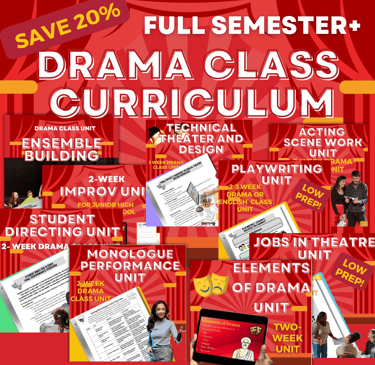
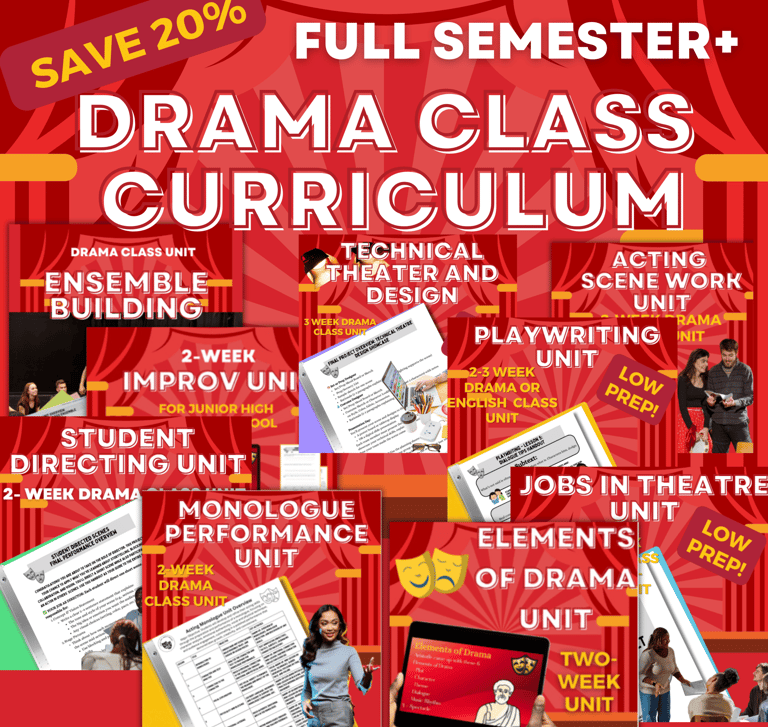
For a ready-to-go set of units with lessons, handouts, and slides already prepared for you, check out my Full Drama Curriculum on TPT!
Skill Areas in this Post
(with links to related posts):
The Real Goal: Buy-In, Not Compliance
In a drama classroom, your goal is not just compliance.
You want your class to feel like:
• This is a place where I can take risks
• This is a class I actually enjoy
• This is a space where I will not be judged
When you achieve that, everything changes.
Students:
• Participate more
• Support each other
• Take creative risks
• Stay engaged
And most importantly, they begin building the kinds of skills that drama is really about:
• Confidence
• Communication
• Collaboration
• Creativity
But none of that happens without trust.
Start with Ensemble, Not Rules
This is the biggest shift in theatre classroom management.
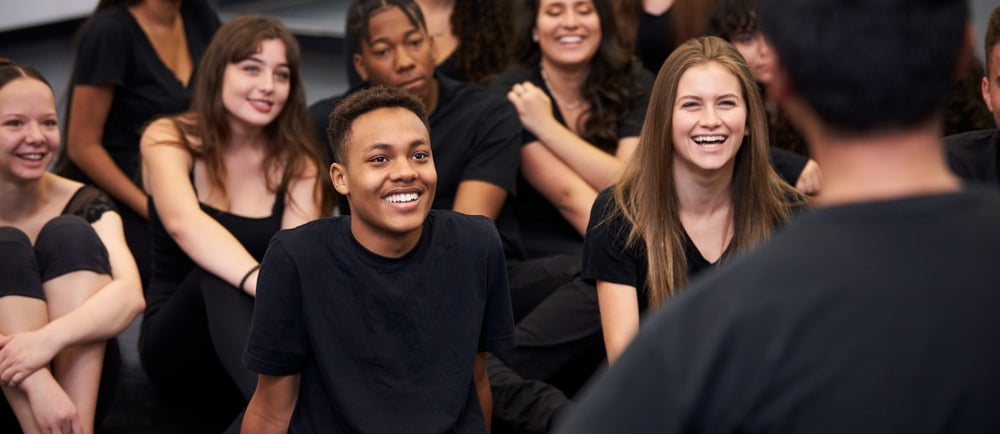
Before focusing on rules, focus on ensemble building.
Because students will not follow expectations they do not feel connected to.
At the beginning of the year, I prioritize:
• Team-building activities
• Low-risk participation
• Shared experiences
• Gradual confidence building
Then we move into building expectations together.
Co-Creating Classroom Expectations
Instead of handing students a list of rules, involve them in the process.
Ask:
• What does a safe drama classroom look like?
• What helps people feel comfortable taking risks?
• What should happen if someone is disrespectful?
Have students contribute to:
• Expectations
• Positive reinforcement
• Consequences
When students are part of the process, they are much more likely to follow through.
If you want a structured way to walk students through this process, my Ensemble Building Unit is designed specifically for this.
It includes activities and lessons that help students:
• Build trust
• Develop buy-in
• Create a supportive classroom culture
Get the Ensemble Building Unit Here
Normalize Risk-Taking Early
One of the biggest barriers in drama is fear of embarrassment.
Students are constantly asking themselves:
👉 “What if I look stupid?”
👉 “What if people laugh at me?”
So your classroom needs to clearly communicate:
Trying is expected. Mocking is not.
Some ways to establish this:
• Model risk-taking yourself
• Celebrate effort, not just performance
• Call out supportive behavior publicly
• Address disrespect immediately and consistently
This is not a one-time conversation.
It is something you revisit throughout the year and at the start of new units or rehearsal processes.
Create Predictable Routines
Even though drama feels flexible, structure is still essential.
Strong routines reduce behavior issues because students know what to expect.
A simple drama class structure might include:
Warm-up
Mini lesson
Main activity
Reflection
When students recognize this pattern, transitions become smoother and classroom management improves.
A visual timer or classroom timer can help keep each section moving smoothly and prevent activities from dragging.
Keep Students Actively Involved
One of the fastest ways to lose control of a drama class is:
👉 Too many students sitting and watching for too long
Instead, aim to keep students engaged by:
• Using small groups
• Rotating roles
• Giving clear tasks during observation
• Assigning responsibilities (director, observer, note-taker)
When students have a purpose, behavior improves.
Set Clear Boundaries for Respect
This is non-negotiable in a drama classroom.
If students do not feel safe, they will not participate.
Be very clear:
• No laughing at others
• No side comments
• No distractions during performances
And follow through consistently.
Students quickly learn whether you mean it.
Revisit Ensemble Throughout the Year
Ensemble building is not just a beginning-of-the-year activity.
You should return to it:
• After breaks
• At the start of new units
• During rehearsal processes
• When class energy shifts
Even a short reset can make a big difference.
Drama Classroom Management Is About Culture
At the end of the day, strong drama classroom management is not about controlling students.
It is about building a classroom culture where:
• Students feel safe
• Students feel supported
• Students are willing to try
When you have that, you are not constantly managing behavior.
You are facilitating growth.
Drama Classroom Management Supplies
Having a few go-to supplies on hand has helped a lot with my drama classroom management strategy.
Visual timer to keep everyone (including yourself) on track
Bluetooth Speaker so you can play music for any mood
Spike Tape for marking out areas of the floor so they're ready-to-go for any game
Bell or Chime for getting students attention or letting them know they are transitioning
Note Cards or Post-its for quick entry/exit questions
Poster Board to display the Rules/Expectations you develop with your class
Want Help Building a Strong Drama Classroom?
If you are working to create this kind of environment, here are a few resources that can help:
🎭 Ensemble Building Unit
Step-by-step lessons to build trust and buy-in in your classroom
🎭 Drama Games Bundle
Engaging activities that help build confidence and participation
🎭 Full Drama Curriculum
A complete, structured program so you are not planning everything from scratch
Grab the Free Drama Classroom Toolkit
If you want practical tools to help your classroom run more smoothly, download my Drama Classroom Toolkit.
It includes:
• Warm-up games
• Classroom organization ideas
• Planning tools
• Bonus teaching resources
These are designed to help you manage your classroom while still keeping it creative and engaging.
Get It Here: Drama Classroom Toolkit
Frequently Asked Questions About Drama Classroom Management
Why is classroom management different in drama?
Drama requires students to take personal and creative risks, which can trigger fear and resistance. This makes emotional safety just as important as structure
How do you get students to participate in drama?
Focus on building trust, starting with low-risk activities, and creating a classroom culture where effort is supported and respected.
What are the most important rules in a drama classroom?
Respect, focus, and willingness to try are the most important expectations for a successful drama class.