The Systems I Use to Create Drama Teacher Lesson Plans Quickly
Learn the systems I use to create drama teacher lesson plans quickly, including backwards planning, structured lessons, and go-to resources for theatre classes.
Katie Zakkak
7/22/20264 min read
As a drama teacher, I've spent years tweaking my lesson planning system to be efficient, practical, and ultimately engaging for my students.
The thing is, srama teachers are rarely just lesson planners. Most of us are also directing productions, organizing costumes and props, managing tech rehearsals, and juggling a hundred other responsibilities.
Early in my career, I realized that constantly creating new drama lesson plans from scratch was not sustainable. What actually helped was creating systems for planning a drama lesson so that I could design lessons quickly without sacrificing quality.
Over time, I developed a few planning systems that make it much easier to build effective theater arts lesson plans while still keeping my class creative and engaging.
Start With Backwards Planning
I learned about it during my credential program, and have come to be a huge believer that backwards planning for drama class is just as useful as it is for other subjects.
Instead of starting with activities, I start by asking:
What do I want students to know or be able to do by the end of the semester?
Once you have that big-picture goal, it becomes much easier to break it into smaller pieces.
For example:
Semester Objective:
Students will understand the fundamentals of acting, collaboration, and theatre production.
From there, you can create unit objectives, such as:
Acting fundamentals
Improvisation
Directing
Technical theatre
Jobs in theatre
Each unit then contains smaller daily objectives that shape your lesson plans for theatre classes.
This approach ensures that every lesson builds toward something meaningful rather than feeling like a random activity.
Create a Consistent Lesson Structure
Another system that speeds up lesson planning is using the same structure for most lessons.
When the structure is consistent, you only need to change the activities rather than reinventing the entire lesson.
My typical structure for drama teacher lesson plans looks like this:
1. Warm-Up
A short activity that helps students transition into class.
Some teachers use the same warm-up every day. Others rotate through theatre games or ensemble exercises.
A few simple props like improv suggestion cards or drama game prompt decks can make this part easy to run.
2. Entry or Bell Ringer Activity
Personally, I like to include entry and exit tickets because they provide documentation of student learning.
Entry questions might include:
What acting technique did we practice yesterday?
What makes a character believable?
What does a stage manager do?
These short writing prompts help students focus while also creating written records of learning.
If you teach theatre in a school setting, that documentation can be incredibly helpful.
3. Mini Lesson
The mini lesson is where you introduce the concept students will explore that day.
This might include:
A short explanation
A demonstration
A quick video clip
YouTube can actually be a great tool for mini lessons. For example, you can use short clips demonstrating acting techniques like the Stanislavski method.
(I also have several videos on my own channel that I continue to build for theatre teachers.)
A simple classroom projector or portable speaker can make these demonstrations easier to share.
4. Main Activity
The main activity is where students apply the concept they just learned.
Sometimes this is a single activity. Other times it includes a smaller exercise leading into a larger one.
Examples might include:
Improv scenes
Tableau storytelling
Character development exercises
Ensemble building activities
The key is making sure the activity clearly connects to the lesson objective.
5. Reflection or Exit Ticket
Reflection helps students process what they learned.
This can be as simple as asking:
What did you learn about acting today?
What helped your group work together?
What would you try differently next time?
Exit tickets also provide valuable documentation of learning, which is especially helpful when writing assessments or communicating with administrators.
Keep Go-To Resources Ready
Another system that makes planning much faster is having a set of go-to resources.
These are materials you can rely on when planning a lesson quickly.
Some examples include:
Theatre textbooks
Acting technique videos
Drama game collections
Prompt generators for improv
Lesson plan libraries
Personally, I have not found many theatre textbooks that are still in print that I absolutely love.
However, I do rely on a combination of:
Video resources
Online materials
My own curriculum resources
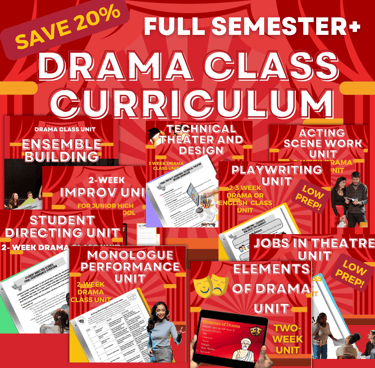
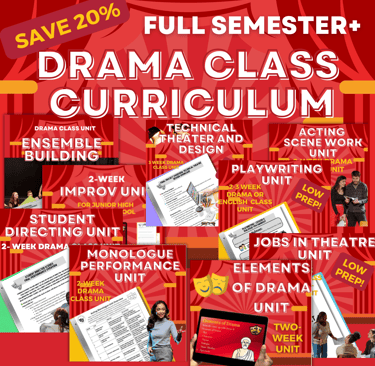
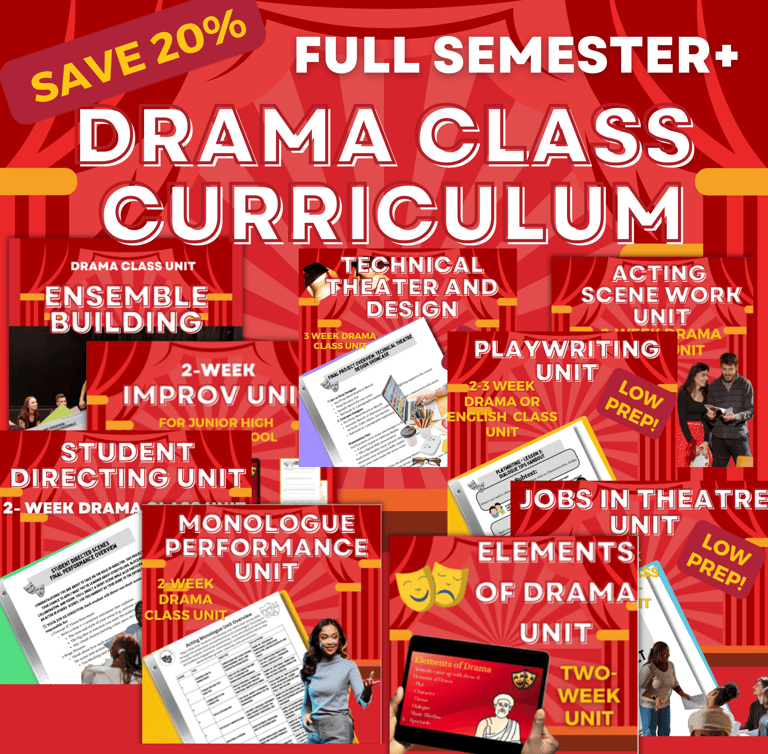
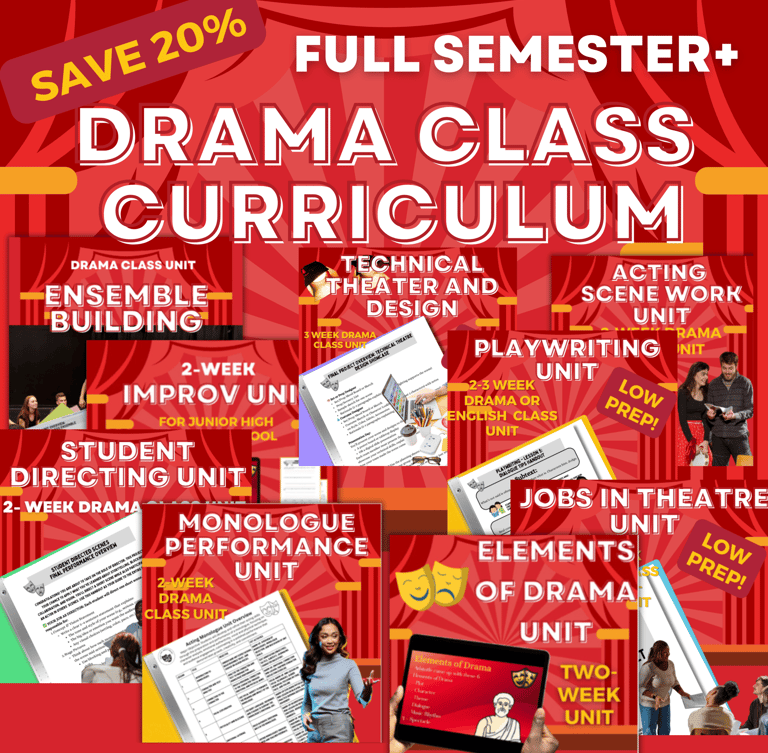
For example, I often use my Full Drama Curriculum, which includes structured lesson plans covering:
Acting fundamentals
Directing
Technical theatre
Jobs in theatre
Ensemble building
Every lesson already follows the structure I described above, which makes planning much faster.
A System Makes Planning Much Easier
One of the biggest mistakes drama teachers make is trying to reinvent every lesson.
Instead, focus on building a repeatable system.
When you have:
Clear objectives
A consistent lesson structure
Go-to resources
Planning theater arts lesson plans becomes much faster and far less stressful.
You spend less time planning and more time focusing on what really matters: helping students grow as performers, collaborators, and creative thinkers.
Once you figure out the system that works best for you and your planning style, you'll be able to plan quality lessons in a much shorter time.
Happy teaching, happy directing, and break a leg!
Frequently Asked Questions About Drama Lesson Planning
How do you plan a drama lesson quickly?
The fastest way to plan a drama lesson is by using backwards planning and a consistent structure. Start with the objective, then design a warm-up, mini lesson, main activity, and reflection that support that goal.
What should a drama lesson plan include?
Most effective drama lesson plans include:
A clear learning objective
A warm-up activity
A short mini lesson
A main activity where students apply the skill
A reflection or exit ticket
What are good resources for theatre lesson plans?
Good resources for theatre lesson plans can include acting textbooks, drama games, video demonstrations, and structured theatre curriculum materials.
How do drama teachers organize their curriculum?
Many drama teachers organize their curriculum into units such as acting, improvisation, directing, technical theatre, and theatre careers. Each unit contains daily lessons that build toward the overall learning goals for the semester.