
Theatre Tongue Twisters That Make Vocal Warm Ups Fun Again
Make vocal warm ups fun again with theatre tongue twisters that build confidence, improve projection, and strengthen articulation.
Katie Zakkak
4/29/20263 min read

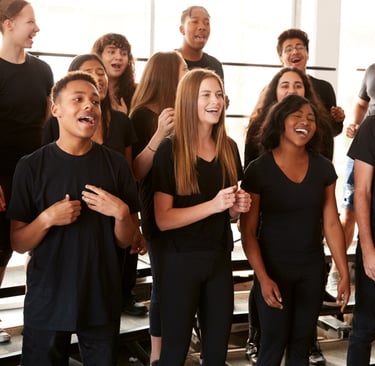
If you have ever stood in front of a group of teenagers and asked them to project their voice, you already know the look:
Half commitment.
Nervous laughter.
Mumbling through the line.
And here is the truth I learned early in my career: most vocal struggles in drama class are not actually about ability.
They are about confidence.
Students are not used to speaking with exaggerated clarity. They are not used to sustaining projection. They are not used to making bold vocal choices. It feels strange. It feels exposed.
That is why theatre tongue twisters are not just articulation drills. When used intentionally, they become low stakes, playful risk taking that builds both skill and confidence at the same time.
When vocal warm ups are fun, students stop guarding themselves. And when they stop guarding themselves, real progress begins.
Why Making Theatre Tongue Twisters Fun Actually Builds Skill
It can be tempting to treat vocal work like a checklist.
But when we turn theatre vocal warm-ups tongue twisters into interactive drama games for voice, three important things happen:
• Students take bigger risks because the tone is playful
• The room energy shifts from self-conscious to collaborative
• Vocal experimentation becomes normal
The confidence piece matters. Because often the real issue is not that a student cannot articulate. It is that they are afraid to sound different from how they normally do.
Fun lowers that barrier.
Theatre Tongue Twisters That Make Vocal Warm Ups Fun Again
Below are specific theatre tongue twisters grouped by skill focus, plus ways to turn them into engaging drama games and activities.
For Crisp Consonants
These focus on plosives and clarity.
1. Bold blue balloons burst behind the bright brick building.
2. Proper purple paper planes glide past polished pillars.
3. Tiny ticking clocks tapped twenty timid toes.
Make it fun:
Divide students into small groups. Each group performs the line as if they are announcing a dramatic movie trailer.
Skill focus: Projection and clear consonants.
For Sibilants and Smooth Flow
4. Silly silver snakes slid silently across the stage.
5. Seven sharp scissors sliced soft satin swiftly.
6. Sassy stage stars sang soaring solo songs.
Make it fun:
Turn it into a “volume ladder.” Students start whispering and gradually build to full stage projection without losing clarity.
This reinforces breath control while keeping energy high.
For Pace and Control
Students often rush through tongue twisters without thinking.
7. Many merry musicians mastered magical melodies.
8. Fred’s friendly frog frequently flips through fog.
9. Theatrical thunder thrilled three thoughtful thinkers.
Make it fun:
Have students perform the line in three ways:
• Extremely slow and dramatic
• Over the top fast
• Perfectly paced for stage clarity
This transforms basic drama tongue twisters into true improv exercises for beginners.
For Projection and Confidence
These are slightly more challenging.
10. Daring directors demanded dynamic dialogue daily.
11. Brilliant Broadway backups boldly belted ballads.
12. Fearless performers proudly project powerful phrases.
Make it fun:
Turn this into a “Confidence Circle.” Students step forward, deliver the line with full commitment, then step back. The class snaps or applauds after each attempt.
This is where theatre tongue twisters become confidence training.
Turning Theatre Tongue Twisters Into Drama Games for Voice
If you want vocal warm-ups to feel less like drills and more like ensemble building, try these variations:
1. Character Voice Challenge
Assign a character type, villain, royalty, exhausted teacher, overly dramatic news anchor. Students deliver the tongue twister in that voice.
2. Emotion Switch
Call out a new emotion mid sentence. Students must adjust instantly.
3. Physical Commitment Add On
Students must pair the tongue twister with a bold physical action.
When you combine physical and vocal work, students stop overthinking.
These strategies turn simple theater warm up tongue twisters into engaging improv games for students who might otherwise resist vocal work.
The Bigger Picture: Confidence Before Perfection
In my early years teaching required drama classes, I realized that students often struggled vocally not because they lacked skill, but because they lacked permission to sound different.
Tongue twisters feel silly. And that silliness is powerful.
Silliness creates safety.
Safety creates risk taking.
Risk taking builds confidence.
Confidence strengthens vocal technique.
When students laugh together, exaggerate together, and commit together, they begin to own their voices.
And that is when the technical work starts to stick.
Want a Complete, Structured Vocal Warm-Up System?
If you are looking for a scaffolded approach to vocal development, my Voice for the Actor Bundle walks students step by step through articulation, projection, breath control, and expressive vocal choices.
You can explore it here.
It pairs beautifully with these theatre tongue twisters and helps you build a consistent, skill based routine.
And if you have not yet downloaded my Free Drama Classroom Toolkit, it includes ready to use planning tools designed specifically for busy drama teachers running full programs on their own.
Vocal confidence is not built by telling students to “speak up.”
It is built through structured play.
Make it fun.
Make it safe.
Make it consistent.
And you will see students who once mumbled begin to project with clarity and conviction.