8 Drama Warm-Up Games for High School That Instantly Boost Energy and Focus
Looking for drama warm-up games for high school that actually work? These 8 no-prep, high-energy activities boost focus, build ensemble, and engage even reluctant students.
Katie Zakkak
5/20/20265 min read
As an Amazon Associate, I earn from qualifying purchases.

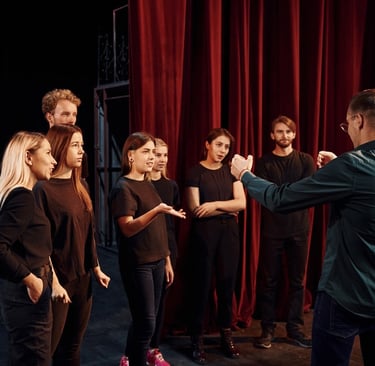
If you’ve ever taught teenagers during first period, you already know the feeling.
A room full of bleary-eyed teenagers, minimal energy, and the uphill battle of getting everyone mentally present, let alone creatively engaged. Honestly, I often felt the low energy right along with them.
I’ve also been in the middle of rehearsals after a full school day, when everyone is tired, focus is slipping, and you know that if you don’t reset the energy quickly, you’re not going to get anything meaningful done.
That’s why I rely on warm-ups that work fast.
Starting class off right sets the tone for the entire period, and honestly, for the whole semester. The same is true in rehearsal. A strong, focused start leads to a more efficient and productive process.
Something you’ll notice about the games below is that they all include either a collaborative element, a friendly competitive edge, or both.
That’s intentional.
When students are working together toward a shared goal, or competing in a low-stakes way, even the more hesitant or shy students tend to buy in. There’s a sense of camaraderie, and suddenly participation feels less risky and more natural.
If you want to go deeper into that idea, you can also explore ensemble-building strategies in your classroom. It makes a huge difference.
1. Park Bench
Best for: Quick thinking, character work, high engagement
Time: 5–10 minutes
Prep: None
This is one of my all-time favorites, and it consistently gets energy up fast.
How it works:
One student sits on an imaginary bench (Person A) - You can either put two chairs together or use a prop bench
Another student approaches (Person B) and must get Person A to leave
They cannot touch them or do anything inappropriate
They must use creativity, persuasion, or character work
Examples students love:
“Didn’t you see the wet paint sign?”
Acting extremely sick
Pretending there’s an emergency
Playing an overly enthusiastic salesperson
Once Person A leaves:
Person B becomes the new person on the bench
A new student steps in
You can run this continuously in a circle, and students can go multiple times.
Why it works:
It forces immediate engagement, encourages bold choices, and creates a fun, low-pressure performance moment.
2. Where’s the Celery?
Best for: Focus, memory, group awareness
Time: 5–8 minutes
Prep: None
This is a layered focus game that really challenges students in a fun way.
How it works:
Students stand in a circle (max about 10 per group)
Round 1: Everyone points to one person while saying their name
Continue until every student has one incoming and one outgoing connection
Then you build layers:
Round 2: Add a category (for example, fruits, this is where “celery” comes in)
Round 3: Add a third category (colors, animals, etc.)
Students now must cycle through all layers simultaneously.
Why it works:
It requires intense concentration while still being playful, which makes it perfect for waking up tired groups.
3. Count to 20 (Without Planning)
Best for: Ensemble awareness, listening
Time: 3–5 minutes
Prep: None
How it works:
The group must count to 20
Only one person can speak at a time
If two people speak at once, you restart
No planning allowed.
Why it works:
This builds instant focus and group connection. Students quickly realize they must listen instead of trying to control the outcome.
4. One-Word Story (With a Competitive Twist)
Best for: Creativity, pacing, collaboration
Time: 5–10 minutes
Prep: None
How it works:
Students create a story one word at a time
Go around the circle
To add energy:
Split into two groups and make it a friendly competition
Challenge them to create the most coherent or funniest story
You act as the "judge" to decide who told the best story with a clear beginning, middle, and end
Why it works:
The pressure of contributing quickly keeps energy high, while the group structure supports hesitant students.
5. Energy Pass
Best for: Physical energy, focus, quick reactions
Time: 3–5 minutes
Prep: None
How it works:
Students pass a “clap” or movement around the circle
Add variations: reverse direction, double speed, sound effects
Why it works:
It’s simple but incredibly effective at waking up the body and sharpening attention.
6. Freeze and Justify
Best for: Improvisation, creativity, confidence
Time: 5–10 minutes
Prep: None
How it works:
Two students start an improv scene
At any point, someone says “freeze”
They tap one actor out and take their exact position
Start a completely new scene that justifies that position
Why it works:
It keeps everyone alert and ready to jump in, while encouraging creative risk-taking.
7. Yes, Let’s (Fast-Paced Version)
Best for: Buy-in, physical movement, group energy
Time: 5 minutes
Prep: None
How it works:
One student suggests an action: “Let’s climb a mountain!”
Group responds: “Yes, let’s!”
Everyone does it immediately
Keep the pace quick so energy builds.
Why it works:
The instant agreement removes hesitation and builds ensemble quickly.
8. Silent Line-Up Challenge
Best for: Focus, nonverbal communication, teamwork
Time: 5–8 minutes
Prep: None
How it works:
Students must line up in a specific order (birthday, height, alphabetical, etc.)
They cannot speak
To add challenge:
Time them
Repeat and try to beat their record
Why it works:
It combines collaboration and light competition, which increases engagement across all personality types.
Why These Warm-Ups Work
When you’re short on time and energy is low, you don’t need complicated.
You need:
Clear structure
Immediate engagement
A reason for students to care
That’s why collaborative and lightly competitive games are so effective. They create a shared goal, which naturally pulls students in, even the ones who are usually hesitant.
If you want to build on this even further, focusing on ensemble-building throughout your course can make a huge difference in long-term participation and classroom culture.
My Favorite Drama Class Products to Use with the Warmup Games
Visual timer to keep everyone (including yourself) on track
Bluetooth Speaker so you can play music for any mood
Spike Tape for marking out areas of the floor so they're ready-to-go for any game
Bell or Chime for getting students attention or letting them know they are transitioning
Want Even More Ready-to-Go Drama Warm-Ups?
If you’re finding yourself constantly needing quick, effective activities, this is exactly why I created my resources.
My Drama Games Bundle includes a wide range of engaging, classroom-tested activities
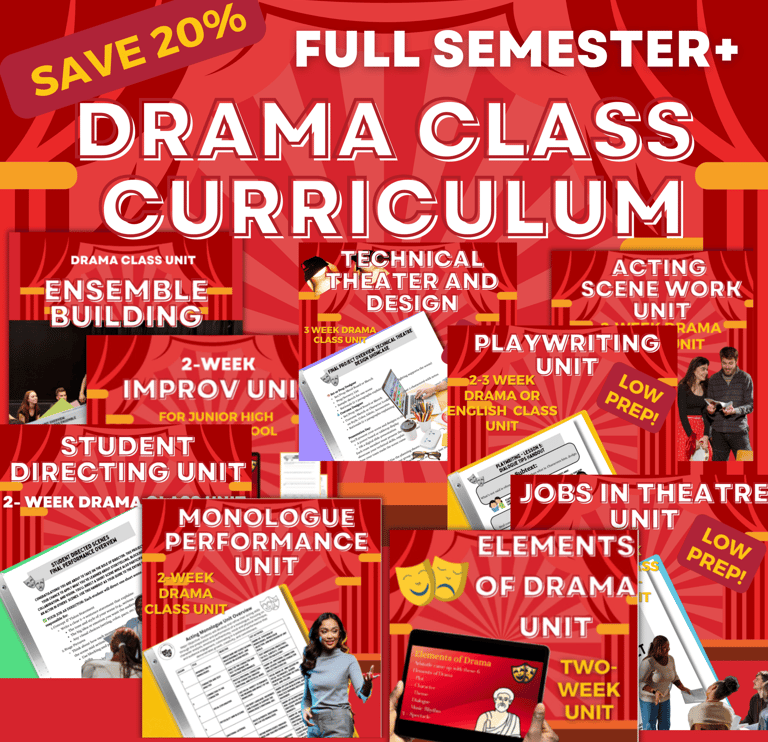
My full drama curriculum includes built-in warm-ups for every lesson
My FREE Drama Teacher Toolkit gives you planning tools, budget strategies, and bonus freebies like warm-up ideas and a production checklist
These are designed specifically for teachers who are doing everything and need resources that actually save time.
👉 Stay updated on new resources, teaching tips, and creative ideas by following Much Ado About Drama.
Empower your students to explore the world of drama in a meaningful and interactive way with this comprehensive unit, and watch their confidence and understanding of the dramatic arts soar!
Please leave a review and share how you used this unit in your classroom!
Resources for Your Drama Classroom!