
Drama Projects for High School Students That Go Beyond Scene Work
Discover creative drama projects for high school students that go beyond scene work. Explore project-based learning ideas that teach theatre careers, collaboration, and production planning.
Katie Zakkak
4/22/20265 min read
If you teach high school drama long enough, you start to notice something...
At some point in the year, students get used to the typical structure of drama class. They expect warm-ups, maybe some improv, and eventually scene work or monologues.
And while those are valuable parts of theatre education, sometimes students become more engaged when projects take them in a completely different direction.
One of the most powerful ways to deepen learning in a drama classroom is through project-based learning.
Drama projects allow students to take ownership of the creative process, explore different aspects of theatre, and develop skills that go far beyond memorizing lines.
If you are looking for drama projects for high school students, here are several ideas that help students think creatively while learning how theatre actually works.
Why Drama Projects Work So Well in High School Theatre
High school students are often ready for more independence. Instead of simply completing assignments, they benefit from opportunities to make decisions, solve problems, and collaborate as a team.
Project-based learning in theatre helps students:
• Understand the many roles involved in producing a show
• Practice leadership and collaboration
• Develop creative problem-solving skills
• Gain confidence presenting their ideas
It also mirrors the way theatre actually works in the real world. Productions are not created by actors alone. They rely on an entire team working together behind the scenes.
1. Create a Theatre Company Project
One of the most engaging drama projects for high school students is having them create their own theatre company.
Students work in groups and imagine they are running a professional theatre organization. Each student takes on a specific role such as:
Producer
Stage Manager
Director
Marketing Manager
Set Designer
Costume Designer
The group then proposes a production for their theatre company. They must decide:
• What show they would produce
• Who their target audience is
• How they would design the production
• How they would promote the show
Students often love this project because they get to step into the real-world roles that make theatre possible.
This concept is exactly what my Jobs in Theater Unit explores in depth. In the unit, students take on specific theatre jobs and collaborate to develop a full production proposal for their own theatre company.
It allows them to learn about the many careers in theatre while still engaging in creative storytelling.
If you don't want to create a unit from scratch, consider my full Jobs in Theatre Unit on TPT.
2. Design a Production Concept
Another creative drama project involves asking students to reimagine a play with a new production concept.
Students choose a play and create a concept for how it would be staged.
They might decide to:
• Set the play in a different time period
• Create a unique visual style
• Develop a thematic interpretation of the story
Students can present their concept using:
Slides
Mood boards
Sketches
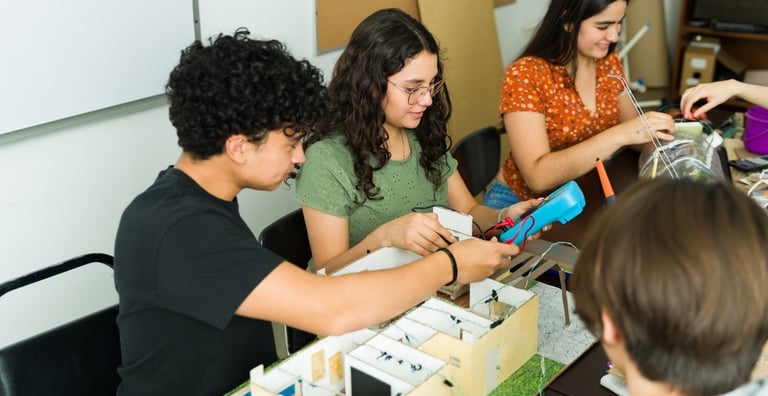
Set models
Simple materials like foam board, colored pencils, or model building supplies can help students bring their ideas to life.
3. Create a Marketing Campaign for a Play
Marketing is an essential part of theatre that many students never consider.
In this project, students imagine they are part of the marketing team for a production.
They create:
• A poster design
• Social media promotions
• A trailer concept for the show
• Taglines and promotional copy
This project helps students explore the intersection of theatre and media, which many students find exciting.
4. Stage Management Simulation
Students often do not realize how important stage managers are until they try the role themselves.
In this project, students learn the basics of stage management and then create materials such as:
• Rehearsal schedules
• Prompt books
• Blocking charts
• Production timelines
Using tools like clipboards, binders, or rehearsal notebooks can make the experience feel more authentic.
5. Costume or Set Design Portfolio
Students interested in visual arts often enjoy theatre design projects.
They can create a small portfolio that includes:
• Character costume sketches
• Fabric choices
• Color palettes
• Set design drawings
Even simple supplies like sketchbooks or watercolor pencils can make the project feel more professional.
My Technical Theatre and Design Unit utilizes a similar project if you want something ready to go.
Why Exploring Theatre Jobs Builds Student Confidence
One of the biggest benefits of drama projects like these is that they help students see there are many ways to participate in theatre.
Not every student feels ready to perform on stage right away.
But when students explore roles like directing, design, stage management, or producing, they begin to understand how theatre works as a collaborative art form.
Ironically, students who start out exploring these roles often gain the confidence to try acting later, because they now understand the full process behind a production.
A Project That Brings All of These Ideas Together
If you want a structured way to explore theatre careers and collaborative production planning, my Jobs in Theater Unit was designed specifically for high school drama classes.
In this project-based unit, students:
• Learn about different theatre careers
• Take on specific production roles
• Collaborate as a theatre company
• Propose a production for their company
It allows students to experience theatre from multiple perspectives, which helps them develop a deeper understanding of how productions come together.
Grab Your Free Drama Classroom Toolkit
If you are looking for even more drama activities and classroom ideas, be sure to download my Drama Classroom Toolkit.
Inside you will find:
• Drama warm-up games
• Classroom setup tips
• Bonus teaching resources
These tools are designed to help drama teachers create engaging classes while balancing the many responsibilities that come with running a theatre program.
Frequently Asked Questions About Drama Projects for High School Students
What are good drama projects for high school students?
Good drama projects for high school students allow them to explore different aspects of theatre beyond acting. Project-based learning activities such as creating a theatre company proposal, designing a production concept, developing marketing materials for a play, or building a stage management plan help students understand how productions come together while practicing collaboration and creativity.
How do you make drama projects more engaging for high school students?
Drama projects become more engaging when students take ownership of the creative process. Allowing students to make decisions about a production, choose roles within a group, or design elements of a show helps them feel invested in the work. Projects that simulate real theatre jobs, such as directing, producing, or stage management, often spark more interest because students can see how theatre works in the real world.
What are examples of project-based learning in theatre?
Project-based learning in theatre can include activities such as designing a full production concept, creating a marketing campaign for a play, developing a costume or set design portfolio, or running a simulated theatre company. These projects allow students to apply theatre knowledge while building skills in teamwork, problem-solving, and creative thinking.
Why should drama students learn about theatre careers?
Learning about theatre careers helps students understand that theatre is a collaborative art form that involves many different roles. While some students enjoy performing, others may be more interested in directing, design, stage management, or production. Exploring these roles helps students see the many ways they can contribute to a production.
How do you teach students about jobs in theatre?
One effective approach is to assign students specific roles within a simulated theatre company. Each student researches their role and contributes to a group production proposal. This type of project allows students to experience how different theatre jobs work together to bring a show to life.
My Jobs in Theater Unit was designed around this concept, allowing students to step into roles like producer, stage manager, designer, or marketing director while developing a production proposal as a team.
What skills do drama projects help students develop?
Drama projects help students build a wide range of skills, including:
• Collaboration and teamwork
• Creative problem-solving
• Communication and presentation skills
• Leadership and responsibility
• Understanding of theatrical production processes
These skills are valuable both inside and outside the theatre classroom.